
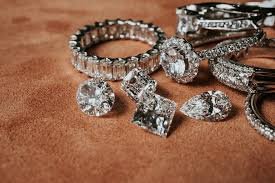

There are various critical steps in the jewelry business before the product is eventually delivered to the clients. Some of the most crucial responsibilities in this process are played by jewelry producers and jewelry dealers. While these names are sometimes used interchangeably, they are two quite distinct roles in the jewelry industry. Retailers, entrepreneurs, designers and even buyers looking for a greater insight into how jewelry goods travel from idea to market will need to know the difference between the two.
A jewelry maker is responsible for making goods of jewelry. This process involves designing, finding raw materials, creating, polishing, finishing and getting the jewellery ready to sell. Jewelry Manufacturer emphasize manufacturing capacities, technological mastery and product development. They are skilled at taking ideas and materials and turning them into completed pieces of jewelry.
A jewelry wholesaler is more about distribution, on the other hand. Wholesalers buy jewelry items in bulk from producers and sell to retailers, internet shops or other companies. Their main function is to connect manufacturing and retail, ensuring that items are delivered to the market effectively.
Manufacturers and wholesalers play very important roles in the jewelry ecosystem yet their duties, business methods, price structure and consumer contact are quite different.
What Is a Jewelry Manufacturer?
Jewelry producer A jewelry manufacturer is a corporation or industrial unit that produces jewelry goods in physical form. The manufacturers take care of the technical and creative sides of making jewelry. In the creation of final items, they use raw materials including gold, silver, platinum, diamonds, gemstones, beads, and other metals.
The production process may include drawing designs, computer assisted design development, mold manufacture, casting, stone setting, engraving, polishing, plating and quality control. Some producers make conventional collections, while others are engaged in the creation of jewelry to order, according to the client’s needs. Manufacturers spend tons of money on technology and craft to ensure accuracy and uniformity.
For many jewelry companies, it’s about relying on producers to make big quantities of goods effectively. Retailers and designers sometimes partner with manufacturers to develop unique collections that represent certain styles or market trends.
What Does A Jewelry Wholesaler Do?
A jewelry wholesaler is just a man between the maker and the retailer. Wholesalers acquire completed jewelry in large numbers and offer it to companies at a fair price, unlike manufacturers who create pieces from scratch.
Wholesalers have large stocks to meet the diverse needs of their customers. They generally provide sellers access to a variety of product types such as rings, necklaces, bracelets, earrings, pendants, and fashion jewelry. Wholesalers deal in volume, and may thus sell at cheaper prices than can the retail sector.
One of the biggest benefits wholesalers provide is convenience. Retailers may order various product styles from a single provider rather of ordering from several manufacturers. This makes purchasing easier and takes the complexity out of logistics.
Wholesalers also play a big role in expanding the market. The main distinction between jewelry producers and distributors is what they really do. Manufacturers produce items while distributors sell products. This difference impacts the way they do business at every level.
Manufacturers concentrate on manufacturing, workmanship and product development. They control raw inputs, labour, machinery and technical criteria. Their mission is to make excellent quality jewelry in an efficient and consistent manner.
Wholesalers concentrate on managing inventory, sales, distribution, and client relationships. They focus on market demand, product variety and delivery speed to merchants. They are not jewelers, they buy things from producers and provide them to companies.
Another big difference is personalization. Manufacturers typically provide customisation services, where customers may develop their own unique designs or change current items. Most wholesalers offer pre-made collections and limited choices for personalization.
Pricing arrangements are also somewhat different. For mass production, manufacturers sometimes have reduced per-unit costs for big production orders. They add markups to storage, shipping, marketing and operating costs and sell their items to retailers.
The Process Of The Jewelry Manufacturers
Design development is usually the first step in the jewelry manufacturer’s manufacturing process. Once the design is approved, producers pick materials and gemstones. At this stage precision and quality are important, since the materials that are used have a big impact on the longevity and look of jewelry.
The next step entails building prototypes or samples. Now, a lot of firms employ computer-aided design software and 3D printing technologies to increase accuracy and remove faults in manufacturing. Finishing prototypes and starting production.
Manufacturing comprises casting metal, shaping parts, placing stones, polishing, plating finishes and quality checks.
The Way Jewelry Wholesalers Work
Jewelry wholesalers are into sourcing inventory and distributing industry. They build partnerships with producers to ensure a steady flow of merchandise at good costs. Many distributors partner with a variety of producers to provide a wider assortment of products.
Jewelry items are stored in warehouses or distribution centers by wholesalers before they are sent to retailers, boutiques, e-commerce enterprises and department stores. One of the most crucial tasks they have is inventory management since merchants rely on them to have the goods available.
In addition to providing items, wholesalers also keep an eye on market developments and client preferences. They study which jewelry categories are doing well and base their buying choices on that. Retailers typically depend on producers for things they cannot get elsewhere. They want something unique, something exclusive.
But the wholesaler usually sells ready-made sets. Some wholesalers may be able to provide limited customization possibilities, but their business is based on inventory that’s ready to sell. Retailers can choose wholesalers over bespoke production since they can get products faster.
Pricing and Profitability
Manufacturers and distributors have different pricing schemes. All kinds. Generally, manufacturers have less manufacturing costs since they make the items. Businesses may typically negotiate high volume orders from manufacturers at reasonable pricing.
But partnering with manufacturers might mean higher minimum order quantities and lengthier manufacturing timeframes. Choosing between manufacturer and wholesaler should be based on your company objectives, retailers. Manufacturers may be better for firms that want to be exclusive and have reduced long-term expenses. Wholesalers may be better for businesses that want convenience and rapid access to inventory.
Summary
Another key difference between jewelry producers and distributors is quality control. The manufacturer controls the whole manufacturing process, which allows them to be in direct control of the workmanship and material standards.
Manufacturers do inspections at different phases of production to find flaws and to maintain uniformity. This practical approach often leads to improved customizing accuracy and product quality.
Jewelry Manufacturer depend on the quality of the products from the producers but may also provide inspection before releasing inventory.