
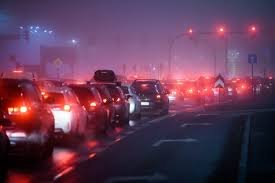

San Francisco is a beautiful city, but it is an absolute furnace for automotive emission systems. The combination of stop-and-go congestion on Van Ness, the constant low-gear strain of climbing Twin Peaks, and the corrosive salt air from the Pacific creates a perfect storm for sensor failure. When the DMV sends that “Smog Certification Required” notice, they aren’t just asking for a fee; they are testing whether your vehicle has survived the city’s unique mechanical toll.
Passing a San Francisco smog check requires more than just a functioning engine. It requires an understanding of how the California Bureau of Automotive Repair (BAR) evaluates your car’s “health” through a mix of software data and physical inspections.
Key Takeaways
- The 20-Minute Highway Rule is non-negotiable. City driving leaves your catalytic converter too cold to chemically neutralize pollutants; you must achieve sustained highway speeds to “light off” the catalyst before the test.
- Fresh oil reduces hydrocarbon spikes. Old, fuel-saturated oil releases vapors through the PCV system that can push a marginal engine into a “Fail” status during the tailpipe analysis.
- Visual integrity is 50% of the grade. A simple disconnected breather hose or an unapproved plastic intake tube will cause an immediate failure, regardless of how clean the exhaust is.
Why “City Driving” Leads to Smog Failures
If you primarily drive within city limits, your car is likely suffering from carbon “sooting.” Because San Francisco engines rarely stay at a constant, high RPM, the combustion chamber never gets hot enough to burn off microscopic carbon deposits on the valves and oxygen sensors.
When you head to a smog check near me, the testing equipment will detect this “lazy” sensor response. A sensor coated in soot reacts slower to changes in the exhaust stream. The car’s computer then struggles to maintain the perfect 14.7:1 air-to-fuel ratio, leading to elevated emissions.
The biggest mistake I see beginners make in the shop is treating the smog check like a surprise quiz. They pull a car out of a garage where it has sat for three weeks and drive it straight to the station. The battery may be slightly weak, the gas may be stale, and the sensors are “asleep.” You must wake the car up before the technician plugs it in.
The “Readiness Monitor” Hurdle
For vehicles made after 2000, the smog check is essentially a data transfer between your car and the state’s mainframe. Your car tracks its own emissions performance through “monitors.” If you recently had a dead battery or cleared a “Check Engine” light with a scanner, these monitors are erased.
The Problem with “Incomplete”
If you show up with “Incomplete” monitors, the station cannot legally pass you. You will be told to “drive it more” and come back. To avoid this, drive at least 50 miles in a mix of highway and street conditions over two days before your appointment. This allows the computer to run its self-checks on the evaporative system, the catalyst, and the oxygen sensors.
Mastering the Visual Inspection
In California, the technician is a detective. They are trained to look for “tampering,” which includes anything that alters the original emissions path.
The Vacuum Leak Reality
When you are actually standing over the hood of a car, a vacuum leak often sounds like a faint, high-pitched hiss. In San Francisco’s damp climate, rubber vacuum lines become porous and crack. This “unmetered air” confuses the computer. Before your test, take a spray bottle of soapy water and lightly mist your rubber intake hoses while the engine idles. If the idle changes or bubbles are sucked in, you have a leak that will likely cause a failure.
Aftermarket Hardware
Ensure every aftermarket part under your hood—from the air box to the exhaust manifold—has a visible CARB Executive Order (EO) number. Technicians are required to cross-reference these numbers. If the sticker is missing, the car is an automatic fail, even if it runs as clean as a Tesla.
Specific Troubleshooting for Common Failures
If you receive a failing grade, the “Vehicle Inspection Report” (VIR) will list the specific pollutants that exceeded the limit.
| Pollutant | The Physical Meaning | The Professional Fix |
|---|---|---|
| HC (Hydrocarbons) | Raw gas leaving the tailpipe. | Usually a spark plug or ignition coil failing to ignite the fuel. |
| CO (Carbon Monoxide) | The engine is “choking” (Rich). | Look for a restricted air filter or a failing Mass Air Flow sensor. |
| NOx (Nitrogen Oxides) | The engine is running too hot. | Often a clogged EGR valve or a cooling system that isn’t shedding heat. |
The Gas Cap Seal
Don’t overlook the simplest part of the fuel system. The smog machine performs a “Functional Test” on your gas cap to ensure gasoline vapors aren’t leaking into the atmosphere. In the salt-heavy air of the Sunset or Richmond districts, the rubber gasket on the cap can become brittle. A $15 replacement cap from a dealership is the most effective “repair” you can perform pre-test.
Professional Insights: The “Heat Soak” Method
The most effective way to pass a marginal car is through thermal saturation. You don’t just want the engine coolant to be at $180°F$; you want the actual metal of the exhaust system to be searing hot.
In the shop, we call this “blowing out the cobwebs.” A spirited drive on Highway 101 or the 280 will clear out the soot buildup on the oxygen sensors. When you arrive at the station, do not turn the engine off. Keep the car idling in the parking lot until the technician is ready for you. If the catalytic converter cools down while you wait in line, its ability to convert NOx and CO drops significantly.
Sensory Details: What a Passing Car Feels Like
A car that is ready for a smog check should have a “crisp” throttle response. If you press the gas and the engine stumbles or “chatters” for a split second before revving, that is a sign of a misfire or a vacuum leak.
The exhaust should be odorless. If you smell a “sulfur” or “rotten egg” scent, your catalytic converter is struggling to keep up with the engine’s output. If you smell raw gasoline, you likely have a leak in the EVAP system or a fuel pressure regulator issue. Addressing these smells before the test will save you a $60 to $80 re-test fee.
Your Immediate Next Steps
Passing a smog check in San Francisco doesn’t have to be a gamble. Follow this checklist to ensure a “Pass” on your first attempt:
- Check the Dash: If the “Check Engine” light is on, stop. Get the codes read and repaired first.
- Verify Battery Health: If your battery is more than 4 years old, it may be causing “ghost” codes in the computer. Have it tested at an auto parts store for free.
- The Highway Burn: Schedule your test for a time when you can drive 20 miles on the freeway immediately before arriving at the shop.
- Oil and Air: Replace your air filter and change your oil if it has been more than 3,000 miles since the last service.
By approaching the inspection with a focus on heat, hardware integrity, and software readiness, you remove the variables that cause most city cars to fail. Focus on the physical condition of your hoses and the temperature of your exhaust, and the paperwork will take care of itself.