
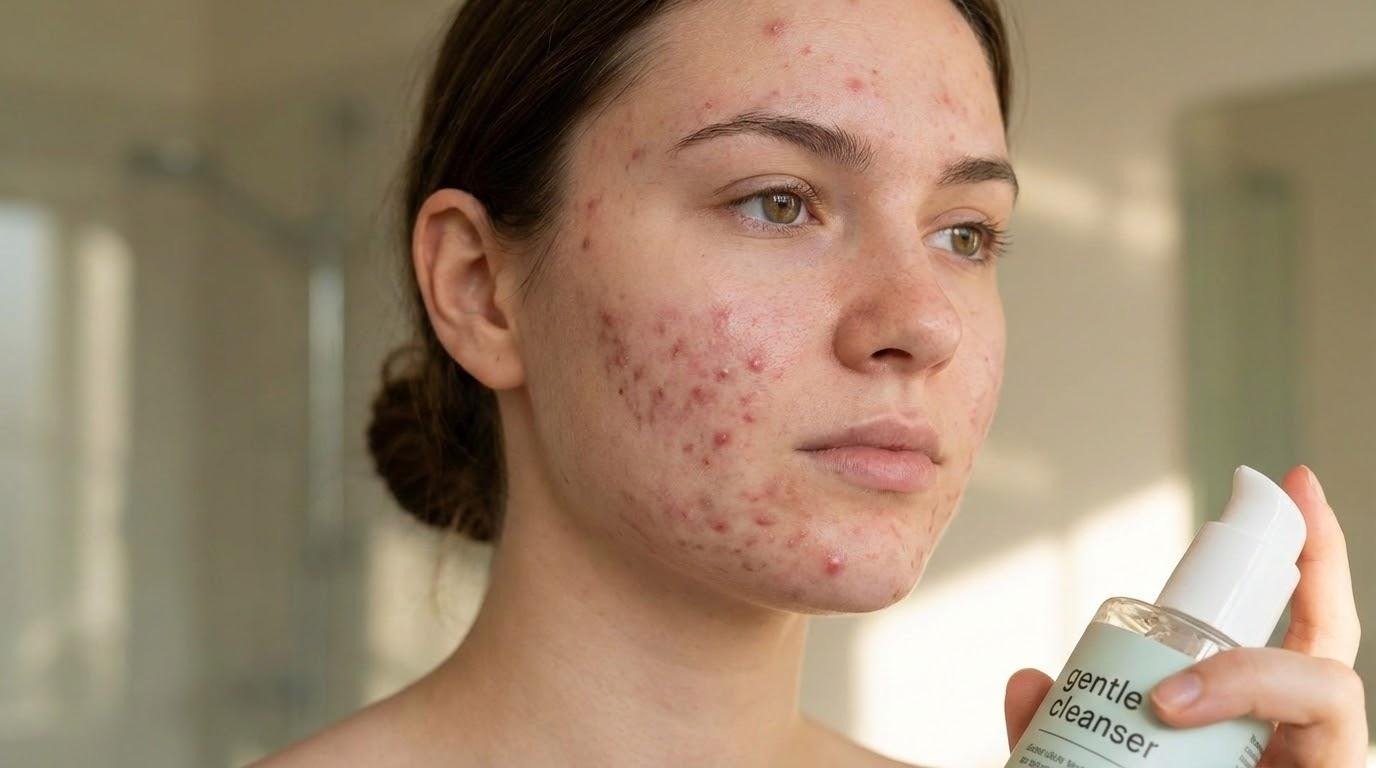

One of the most searched questions in skincare is “how to choose the right face wash for my skin?” Are you also confused regarding the same? Let us see what there is to know before buying a face wash for the acne-prone skin.
A face wash is a basic yet essential part of our skincare routine. It is not like one-size-fits-all. You need to look for a face wash that is a “fit” for your skin. The real answer is your “skin types” and “skin concerns”.
Dermatologists recommend choosing a face wash based on its active ingredients. Consider your skin type, not just some trendy product. In this guide, let us break down the information for you so you can choose the right face wash for acne-prone skin.
Key Factors to Consider When Getting a Face Wash
Here are factors that one must consider when choosing the right face wash for themselves:
- Skin type is considered, whether you have dry, oily/acne-prone or combination skin, determining which face wash will be ideal for you.
- Skin concerns need not be ignored when you are looking for a face wash because various face washes target various skin concerns like dullness, acne, dehydration and more. All you need to do is choose one that targets yours.
- The active ingredients used to formulate the face wash also determine efficacy.
- pH-balanced formulas in fae washes help maintain the skin’s protective barrier and prevent irritation.
- Non-comedogenic formulas are the ones that do not clog pores and reduce the risk of acne and breakouts.
According to dermatologists, the best face wash is:
- Remove dirt, oil and impurities on the skin
- Maintain the skin’s barrier.
- Support other skincare products.
A good cleanser can help serums and moisturisers absorb better into the skin.
The Best Face Wash for Acne and Oily Skin: Salicylic Acid Face Wash
Think of salicylic acid as a deep pore cleanser. It unclogs the pores and goes deeper than regular face washes, treating the pores and mild acne from where it begins. It is recommended for:
- Oily Skin
It controls excess sebum production. It penetrates deep into the pores and unclogs them, making it great for oily skin.
- Acne-Prone Skin
It is an oil-soluble acid that enters clogged pores and reduces inflammation. It does help with swelling in pustules and ance.
- Coged Poers
It travels through sebaceous filaments due to its oil-soluble nature and breaks down the cells that hold together the dead skin and sebum.
- Blackheads and Whiteheads
They travel between sebaceous filaments, disolving excess sebum and dead skin cells. It unclogs pores and exfoliates the skin.
Key benefits of a salicylic (BHA)
- Deep hydration
- Strengthens the skin’s barrier
- Prevents moisture loss
How Salicylic Acid Works for Acne-Skin?
It is particularly effective in treating comedonal acne, which includes blackheads and whiteheads. It works by penetrating the pores and dissolving the excess oil and debris trapped inside. This helps clear out blackheads and whiteheads, preventing new ones from forming.
- It effectively treats mild acne by exfoliating the skin and clearing clogged pores. It provides noticeable improvement, typically appearing after several weeks of consistent use.
- The appropriate form and concentration of salicylic acid for acne treatment varies from 0.5% to 7%. This is the range in over-the-counter and prescription products and should be chosen based on individual skin type and condition.
When the pores get plugged with dead skin cells and oil, blackheads, whiteheads, or pimples often appear.
Salicylic acid penetrates the skin and works to exfoliate and dissolve the dead skin cells clogging the pores. It can take several weeks of use for you to see its full effect. Check with the dermatologist if you are not seeing results after 6 weeks.
What Form of Salicylic Acid is Usually Recommended for Acne?
The dermatologist wil recommend a form and dosage specifically for the skin type and current condition. They might also recommend that you apply only a limited amount to a small area of affected skin for 2 or 3 days to test the reaction before applying to the entire area.
Salicylic acid is also used in higher concentrations as a peeling agent for the treatment of the following issues:
- Accne
- Acne scars
- Melasma
- Age spots
Now, we hope you have understood what to look for when choosing “Face Wash for Acne”. It is good to do a patch test and understand the product before going to actually using it as a solution. Take help from a skin specialist if you are confused.