
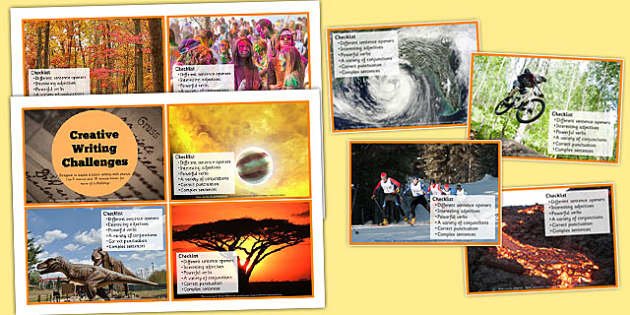

“I don’t know what to write.”
If you have ever tried to teach writing to a 7, 8, or 9-year-old, you have heard this sentence. It is the sound of a brain hitting a wall. Most parents and even many teachers react to this by saying, “Just write whatever comes to your mind!” or “Use your imagination!”
That is terrible advice.
I have spent years working with young writers, and I can tell you that “total freedom” is actually paralyzing for a child. When you tell a kid they can write about anything, they usually write about nothing. They freeze. Their internal editor kicks in, and they stare at the blank page until they hate the assignment.
To get high-quality creative writing from kids, you don’t need an open field; you need a fence. You need constraints. When you give a child a specific set of rules and a strange scenario, their brain instantly starts looking for solutions. That is where stories come from.
We are going to look at a specific module I use for this age group: World Building. specifically, using the prompt: “The Moon tells secrets about forgotten kingdoms.”
If you are looking for a solid creative foundation for your homeschool writing curriculum, this “Kingdom Building” method is the best place to start. It turns writing into a game of design rather than a chore of grammar.
Why Most “Story Starters” Fail
Before we get into the kingdom, we need to address why most writing prompts for kids are garbage. You have seen them. They look like this:
- “Write about your favorite vacation.”
- “What would you do if you found a magic ring?”
- “Describe your best friend.”
These are boring. They rely on memory or tired clichés. They don’t push the child to invent anything new. They just ask for a report.
A good creative writing prompt forces the child to answer questions they have never considered before. It requires them to build logic for a world that doesn’t exist.
The Difference Between Standard and Structural Prompts
| Feature | Standard “Fluff” Prompts | Structural World-Building |
| Cognitive Load | High (Child has to invent the context alone) | Manageable (Context is provided, child fills details) |
| Engagement | Low (Feels like homework) | High (Feels like playing Minecraft or Lego) |
| Outcome | Usually 3-4 vague sentences | Detailed descriptions and logical rules |
| Skill Focus | Recall and basic sentence structure | Cause-and-effect logic and descriptive imagery |
Step 1: The Hook – Listening to the Moon
We start with the core prompt: The Moon tells secrets about forgotten kingdoms.
Don’t ask the child to start writing a story yet. First, we have to treat this as a research project. Ask your child to imagine they are a “Kingdom Archaeologist.”
Ask them these direct questions to get the gears turning:
- How does the moon talk? Does it have a mouth? Does it whisper in your dreams? Does it write messages in the clouds?
- Why did the kingdom get forgotten? Did the people leave? Did a dragon sit on it? Did it shrink until it was too small to see?
Once they answer these, you have your opening hook.
Step 2: Mapping the Geography
7-to-9-year-olds are tactile. They need to see the world before they write about it. Grab a piece of paper and have them draw a circle. This is the kingdom.
Now, challenge them to break nature’s rules. A standard forest is boring. A mountain made of rock is dull. In this forgotten kingdom, the geography must be weird.
Here is a list of “Biome Mashups” I use to help kids break out of standard thinking:
- The Food Landscape: A river made of hot chocolate, trees made of broccoli (the badlands), or mountains made of stale bread.
- The Texture Swap: The ground is soft like a mattress, but the water is hard like glass until you sing to it.
- The Color Shift: The grass is purple, and the sky is neon green.
Task: Have them write down three specific locations in their kingdom.
- Example: The Whispering Caves, The Jello Swamp, The Tower of Lost Socks.
Step 3: The “One Big Rule” (Laws of the Realm)
This is where the writing gets interesting. Every society has rules. In a forgotten kingdom, the laws of physics or society should be different from ours.
I call this the “One Big Rule” technique. If you change one fundamental rule of reality, the whole story changes.
Ideas for The One Big Rule:
- Gravity Flip: On Tuesdays, gravity stops working, and everyone has to tie themselves to the floor.
- Currency Change: People don’t use money. They pay for things with jokes. The funnier the joke, the more you can buy.
- Animal Speech: All animals can talk, but they only tell lies.
- Weather Moods: It only rains when the King is sad. It is only sunny when the Queen laughs.
Ask your child: “What is the one rule in your kingdom that makes it different from Earth?”
Once they decide on a rule, ask them to write two sentences explaining how the people live with this rule. This teaches cause-and-effect writing. If gravity turns off, how do you eat soup? (Answer: You probably drink it from a sealed bag).
Step 4: The Inhabitants
Who lives here? If you let a child choose without guidance, they will pick “humans” or “knights.” Push them further.
In a creative writing curriculum, character creation is vital. The inhabitants should reflect the geography we built in Step 2.
- If it is a kingdom of clouds, maybe the people have wings.
- If it is a kingdom underground, maybe they have giant eyes to see in the dark.
- Maybe they aren’t people at all. Maybe they are intelligent toaster ovens.
The Character Profile:
Have the child write a short profile for the “Main Character” of this kingdom.
- Name: (Encourage weird names like Zog, Glip, or Barnaby the Brave).
- Job: (Cloud-sweeper, Dragon-dentist, Slime-farmer).
- Biggest Fear: (Water, silence, running out of cheese).
Step 5: The “Moon’s Secret” (The Plot)
Now we return to the main prompt. The Moon told a secret about this place. What was it?
A story needs conflict. The secret introduces the problem. Without a problem, you don’t have a story; you just have a description.
Here are three “Secret Structures” to help young writers understand plot:
- The Hidden Treasure Secret: “The Moon whispered that deep under the castle, there is a machine that makes endless ice cream, but it is broken.”
- The Danger Secret: “The Moon said that the kingdom isn’t on an island; it is actually on the back of a giant sleeping turtle, and the turtle is waking up.”
- The Missing Item Secret: “The Moon revealed that the King lost the Magic Key that keeps the sun rising, and now it is getting darker every day.”
Writing Task:
Ask the child to write one paragraph describing the moment they heard the secret.
- Start with: “Last night, the moon looked down at me and whispered…”
Troubleshooting: When They Get Stuck
Even with a structure, kids get stuck. Here is how I handle the most common issues during these sessions.
“I don’t like my idea anymore.”
This happens often. They start writing about a candy kingdom and then decide it’s “for babies.”
The Fix: Don’t let them scrap it. Teach them to pivot. Okay, it’s a candy kingdom, but the candy is rotten and scary. Now it’s a horror story. Twist the idea, don’t delete it.
“How long does it have to be?”
Never give a word count to a 7-year-old. It turns writing into math.
The Fix: Use “Idea Counts.” Tell them, “I need you to describe three buildings and one monster.” It doesn’t matter if it takes 50 words or 500 words, as long as those ideas are clear.
“I can’t spell that word.”
Spelling anxiety kills creativity. If they stop every ten seconds to ask how to spell “mysterious,” they lose their flow.
The Fix: Tell them to “circle and skip.” If they don’t know a word, circle it, write it how it sounds, and keep going. You can fix spelling later. The drafting phase is for ideas, not editing.
Structuring the Final Piece
Now you have all the components.
- The Hook: The Moon talking.
- The Setting: The geography.
- The Logic: The One Big Rule.
- The Conflict: The Secret.
Have your child combine these into a short story. For a 7-9 year old, this might look like 3 distinct paragraphs.
- Paragraph 1: Introduce the weird kingdom and its rules.
- Paragraph 2: Introduce the character living there.
- Paragraph 3: Reveal the secret the moon told them and what they are going to do about it.
Frequently Asked Questions
My child hates handwriting. Can they type?
For this age group (7-9), handwriting is usually better for memory retention, but if the physical act of writing is the barrier, yes, let them type. Or better yet, let them dictate the story to you while you type it. The goal is composition (creating ideas), not transcription (moving a pencil). Don’t let bad motor skills kill a great story.
How often should we do creative writing?
Short bursts are best. 15 to 20 minutes, two or three times a week. If you force them to sit for an hour, they will resent it. Stop while they are still having fun, so they want to come back next time.
Should I correct their grammar immediately?
Absolutely not. Nothing shuts down a creative writer faster than red ink. Praise the ideas first. “Wow, I love that the trees are made of glass!” fix the grammar in a separate session later, or just let it slide if the focus is purely on imagination.
Conclusion
Creative writing isn’t about waiting for a muse to land on your shoulder. It is about engineering. It is about taking two things that don’t belong together—like a moon that talks and a kingdom made of cheese—and smashing them together to see what happens.
When you use the “Forgotten Kingdom” prompt, you aren’t just asking your child to write sentences. You are asking them to be an architect, a lawyer, a biologist, and an adventurer all at once. That is the kind of engagement that builds real writing skills.
Give them the boundaries, ask them the hard questions about gravity and geography, and watch them fill that blank page.